
Explanation
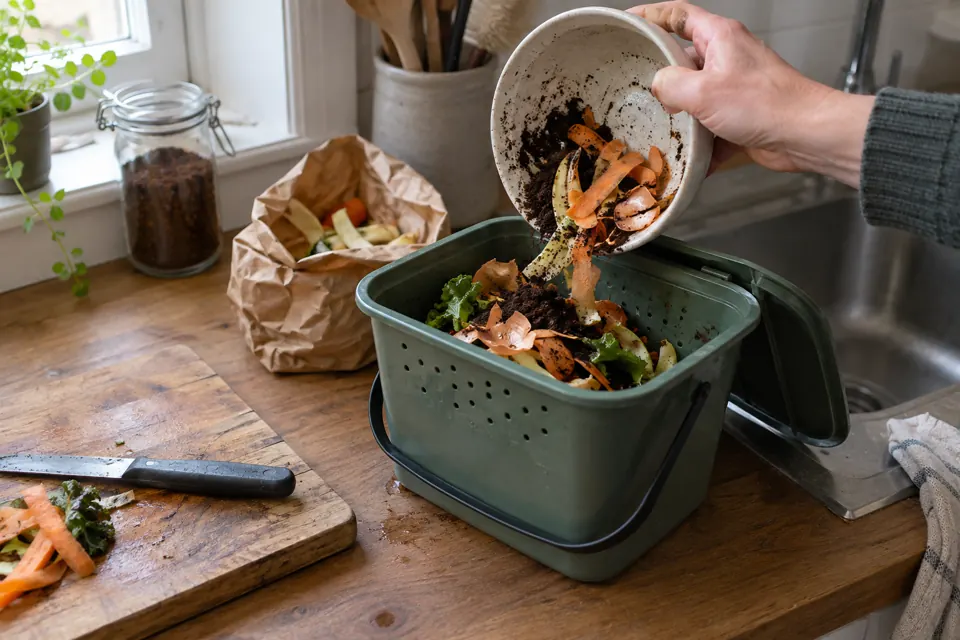
Composting is the managed biological decomposition of organic matter into dark, crumbly, nutrient-dense humus. In nature, fallen leaves, decaying twigs, and plant debris break down continuously on the forest floor. In households, composting diverts nitrogen-rich kitchen scraps and carbon-rich paper from landfills, preventing methane generation while producing a free, regenerative soil amendment.
The Biological Principle: Aerobic Decomposition
Healthy composting relies on billions of aerobic microorganisms—bacteria, actinomycetes, and saprophytic fungi—that require four basic elements to thrive: carbon (for energy), nitrogen (for microbial protein synthesis), oxygen (for aerobic respiration), and moisture (to sustain cellular activity).
- Mesophilic phase (20–40°C): Primary bacteria begin breaking down soluble sugars and starch.
- Thermophilic phase (40–65°C): Heat-tolerant bacteria rapidly digest complex cellulose, killing weed seeds and human pathogens.
- Curing phase: Temperature drops as fungi and macro-organisms (worms, woodlice, beetles) mature the compost into stable humus.
Greens vs. Browns: Balancing the C:N Ratio
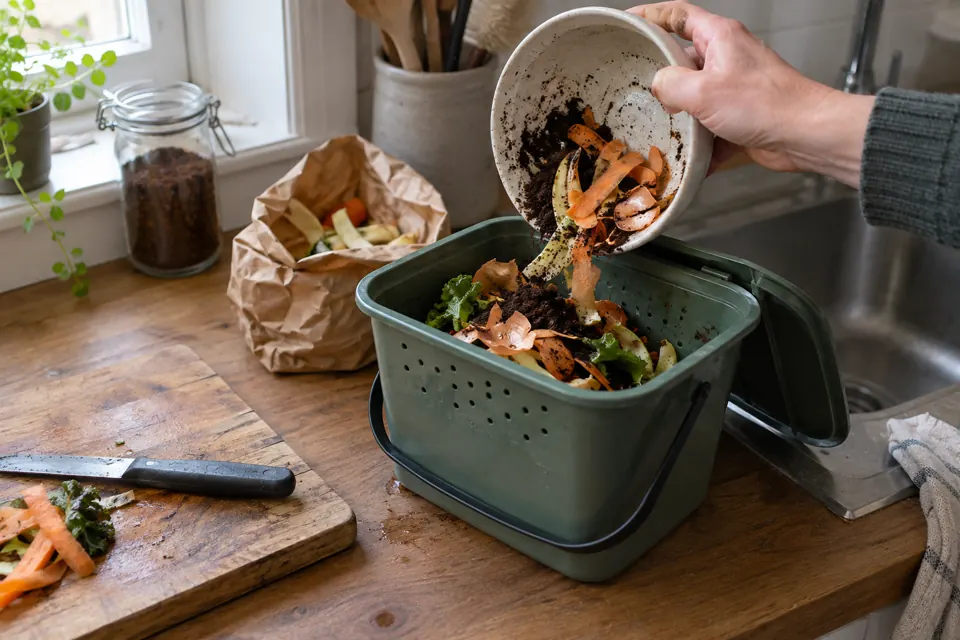
The golden rule of successful composting is maintaining a balanced Carbon-to-Nitrogen (C:N) ratio of approximately 25:1 to 30:1. 'Greens' supply rapid moisture and nitrogen, while 'Browns' supply structure, carbon, and air channels.
| Material | Type | Approximate C:N Ratio | Moisture Contribution | Practical Role in Pile |
|---|---|---|---|---|
| Vegetable Trimmings & Fruit Peels | Green (Nitrogen) | 15:1 to 20:1 | High (80–90% water) | Provides primary microbial food; decompose rapidly |
| Coffee Grounds & Filter Papers | Green (Nitrogen) | 20:1 | Moderate moisture | Rich in nitrogen despite dark color; accelerates heating |
| Fresh Lawn Grass Clippings | Green (Nitrogen) | 18:1 to 20:1 | High moisture | Use in thin layers; mats and turns slimy if unmixed |
| Dry Autumn Leaves | Brown (Carbon) | 50:1 to 60:1 | Low (dry) | Ideal structural carbon; store in bags for year-round mixing |
| Torn Cardboard & Egg Cartons | Brown (Carbon) | 200:1 to 350:1 | Very dry | Maintains aeration pockets; absorbs excess bottom moisture |
| Untreated Sawdust & Wood Chips | Brown (Carbon) | 400:1 to 600:1 | Dry | Slow decomposition; excellent for lining bin base |
A working mix needs balance
- Moist kitchen scraps provide nitrogen and water.
- Dry leaves, torn cardboard and other brown material add carbon and structure.
- Air, moisture and occasional mixing help the process, while local rules decide what is accepted.

Troubleshooting: Odors, Moisture, and Pests
- Foul or rotten-egg odor: The pile has become anaerobic due to excess moisture or insufficient air. Turn the pile immediately and blend in generous amounts of dry torn cardboard.
- Ammonia smell: Excess nitrogen ('greens'). Add more high-carbon brown material like dry leaves or wood shavings.
- Pile stays cold: Too dry or too carbon-heavy. Add nitrogen-rich vegetable scraps or coffee grounds and moisten until it feels like a damp wrung-out sponge.
- Fruit flies around caddy: Keep caddy lid tightly sealed and always cover fresh scraps with a layer of dry shredded paper.