
Try it like this
In natural forest and grassland ecosystems, bare earth is an emergency state that landscapes quickly cover with pioneer species. Leaving cultivated soil exposed to open skies subjects surface aggregates to the direct impact of heavy raindrops, breaking down crumb structure, creating an impermeable surface crust, and accelerating wind and water erosion.
Protecting Soil Biology and Conserving Moisture
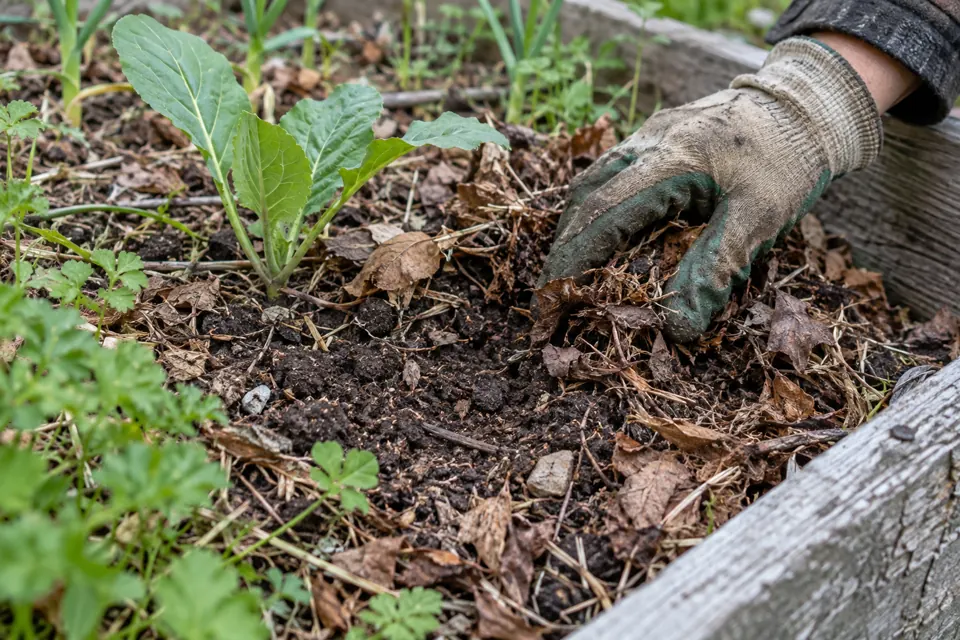
Covering garden soil with an organic mulch acts as a physical buffer against environmental extremes. During hot summer spells, mulch moderates root-zone temperatures and reduces surface evaporation, cutting irrigation requirements. During cold winter periods, it protects beneficial earthworms and fungal mycorrhizae from hard frost cycles, steadily breaking down over time to build dark, moisture-retaining organic matter.
- Maintain an organic mulch depth of five to eight centimetres to effectively suppress weed germination.
- Keep mulch drawn two to three centimetres back from plant crowns and tree bark to prevent moisture-induced fungal diseases.
- Water the ground thoroughly before spreading mulch, as dry soil covered by thick mulch can repel light showers.
- Reapply lightweight mulches like autumn leaves or straw annually as biological earthworms incorporate them into the subsoil.
Selecting the Right Cover Material
Different garden areas require different organic mulches. Coarse woody materials such as wood chips or tree bark decompose slowly and are well-suited to perennial shrub beds, orchards, and garden walkways. Fast-cycling annual vegetable patches and delicate flower beds benefit more from compost, clean seed-free straw, or shredded deciduous leaves that break down within a single growing season.
| Cover Material | Breakdown Speed | Best Placement | Key Practical Consideration |
|---|---|---|---|
| Shredded Tree Leaves | Seasonal | Flower borders, raised beds, around fruit bushes | Shred or spread thinly to prevent dense matting |
| Clean Straw / Hay | Seasonal | Vegetable gardens, strawberry patches | Choose clean material and check local weed risk |
| Matured Garden Compost | Faster | No-dig annual vegetable beds, seedling rows | Use finished compost with an earthy smell |
| Wood Chips / Tree Bark | Slow | Perennial beds, shrub borders, walking pathways | Keep on the surface; avoid mixing fresh wood into planting holes |
Surface cover assessment
- Inspect your garden beds, container surfaces, or allotment plots to calculate the proportion of exposed bare earth.
- Gently dig back a patch of covered soil versus bare soil to compare tactile moisture, temperature, and earthworm presence.
- Gather locally available organic materials—such as fallen leaves or clean straw—to cover bare soil patches.
Try it like this
Try it like this
- Remove invasive weeds without leaving soil bare for long.
- Use mature compost, leaves, straw, or a suitable living cover.
- Leave space around stems and watch moisture before watering again.