Try it like this
Efforts to reduce household plastic packaging often stall when people attempt to eliminate all single-use containers overnight. Packaging is deeply embedded in conventional retail supply chains, making total packaging-free living demanding and time-consuming. Building a durable circular routine means selecting one predictable, high-volume staple and integrating its refill into existing shopping habits.
Selecting High-Volume Everyday Staples
Good beginner candidates are products you buy regularly and can carry safely: a dry pantry staple, soap, or cleaning liquid. Availability varies by place. Each refill can avoid some new packaging, but the result depends on the container, the shop's system, and whether the routine is convenient enough to keep.
- Select one household product that is depleted and repurchased on a predictable monthly rhythm.
- Clean and completely dry glass jars, bottles, or sturdy plastic containers before refilling them to avoid bacterial growth.
- Record the tare weight of your empty vessels using a kitchen scale or store scale before filling at bulk hoppers.
- Keep clean refill containers stored directly inside your reusable shopping bags so they are never forgotten when running errands.
Container Hygiene, Tare Weights, and Bulk Formats
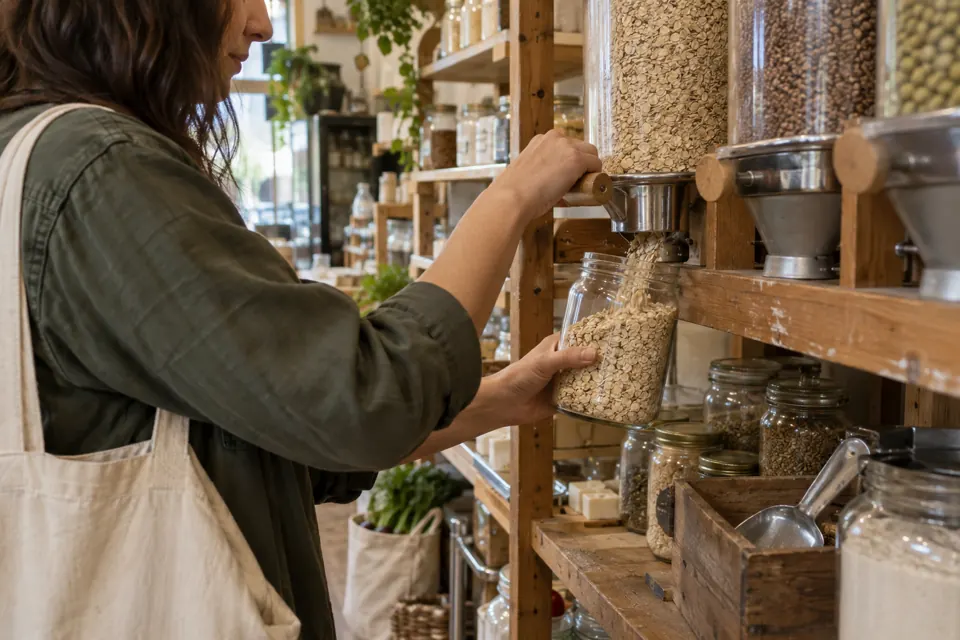
Hygiene is vital when reusing containers for liquids and food. Moisture in dry cereal or flour jars can encourage mould and pantry pests, while a shop may have specific rules for compatible bottles and dosing caps. Where dedicated refill shops are absent, compare returnable or larger formats with the amount your household will actually use.
| Product Class | Typical Replaced Packaging | Refill Facility Availability | Hygiene & Preparation Step |
|---|---|---|---|
| Liquid Laundry Detergent | Plastic jugs or pouches | Varies by area | Use a clean container and follow the shop's handling instructions |
| Dishwashing Liquid | Single-use squeeze bottles | Varies by area | Wash and dry the container; preserve a compatible dosing cap |
| Dry Pantry Grains & Pulses | Plastic or paper packets | Often available at specialist shops | Use a clean, dry, airtight container |
| Culinary Oils & Vinegars | Glass or plastic bottles | Usually more specialised | Use a completely dry, compatible bottle |
Prepare your starter refill kit
- Pick one liquid cleaning staple or dry grain that your household is close to finishing.
- Wash an empty container with hot soapy water, remove labels, and allow it to air-dry completely.
- Locate the nearest bulk dispensary, packaging-free grocer, or store refill station along your normal weekly travel route.
Try it like this
Try it like this
- Start with something shelf-stable or easy to carry, such as dry goods or soap.
- Search your local map for a refill or package-free shop.
- Keep a clean container ready where you will remember it.