
Try it like this
In paved urban and suburban landscapes, rain is often moved quickly from roofs and paths into gutters and storm drains. That can make heavy rainfall harder for drainage systems and soils to absorb, while planted ground can slow, store, and filter some water close to where it falls.
Observing Overland Flow and Infiltration Dynamics
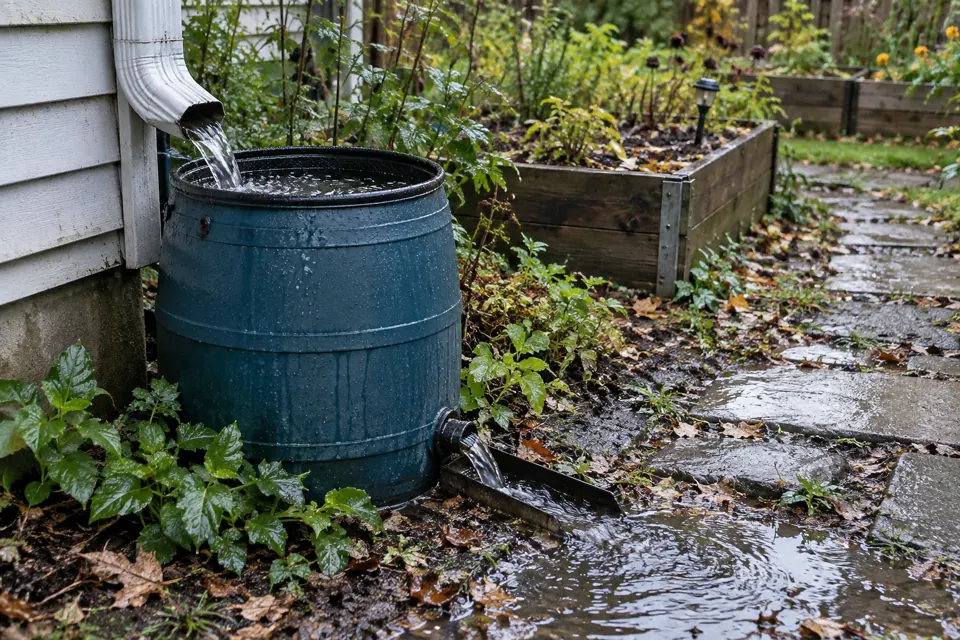
Before installing rainwater collection barrels, excavating swales, or reshaping garden beds, observing water flow across your site during an actual rain event provides essential clarity. A single moderate rain shower reveals micro-topographical slopes, roof downspout overflows, compacted soil barriers, and natural retention hollows that are invisible when the ground is dry.
- Put on waterproof clothing during active rain and walk the perimeter of your building and outdoor spaces.
- Inspect roof downspouts, gutters, and valley joins for overflowing water, sagging brackets, or debris blockages.
- Trace where water sheets off impermeable surfaces—such as roofs, patios, asphalt paths, and driveways.
- Identify areas where water ponds and remains standing for more than twenty-four hours after the rain ceases.
Translating Stormwater Observations into Action
Mapping these flows helps you choose a proportionate next step. Where it is safe and permitted, runoff can sometimes be guided from hard surfaces toward planted beds, tree basins, or permeable areas. Slowing water may help soil absorb more moisture, but it should never create a foundation or neighbour problem.
| Observed Pattern | Underlying Hydrological Cause | Potential Site Risk | Practical Remediation |
|---|---|---|---|
| Gutter Overflow | Gutter blocked with leaves or undersized downspout | Damp exterior walls, eroded foundation soil | Clear gutter channels; fit gutter leaf guards |
| Surface Sheet Runoff | Compacted turf, clay crust, or sloping concrete | Loss of moisture, topsoil erosion, muddy pathways | Aerate ground; add organic mulch or permeable gravel paths |
| Persistent Standing Pond | Depression sitting over compacted, impermeable subsoil | Root drowning, plant dieback, mosquito breeding | Create a planted rain garden featuring water-tolerant native species |
| Rapid Infiltration | Spongy, well-aerated soil rich in organic matter | None (ideal hydrological function) | Maintain year-round mulch cover to protect soil aggregate porosity |
Five-minute storm flow mapping
- Sketch a rough aerial outline of your property showing roofs, paved surfaces, downspouts, and garden areas.
- During the next active rain shower, draw arrows indicating the direction water flows across the ground.
- Circle any spots where water accumulates into standing puddles or cuts erosion rills in exposed soil.
Try it like this
Try it like this
- Observe from a safe place during or after rain.
- Mark compacted ground and areas that dry quickly or stay wet.
- Use the sketch to guide future mulch, planting, or professional drainage advice.