
Try it like this
Widespread habitat loss, intensive pesticide application, and overly manicured urban green spaces have significantly diminished wild pollinator populations. Honeybees, solitary bees, hoverflies, and butterflies require dependable, pesticide-free floral resources. Creating a dedicated pollinator corner in a garden, balcony, or courtyard provides a critical resting and foraging station across urban landscapes.
Designing for Consecutive Seasonal Flowering
A resilient pollinator habitat provides blooming forage across the entire active insect season rather than a brief explosion in midsummer. Solitary bees and emerging bumblebee queens need nectar and pollen in early spring to establish new colonies, while late-season workers rely on autumn asters and flowering ivy to store reserves ahead of winter dormancy.
- Choose single-petaled, open-faced flower varieties where nectar and pollen are readily reachable by short-tongued insects.
- Group matching flowering species together in clumps of three or more so foraging insects can spot them easily.
- Select regionally adapted native or hardy perennial herbs such as lavender, chives, thyme, and marjoram.
- Completely avoid synthetic insecticides, systemic neonicotinoids, and broad-spectrum herbicides in the growing area.
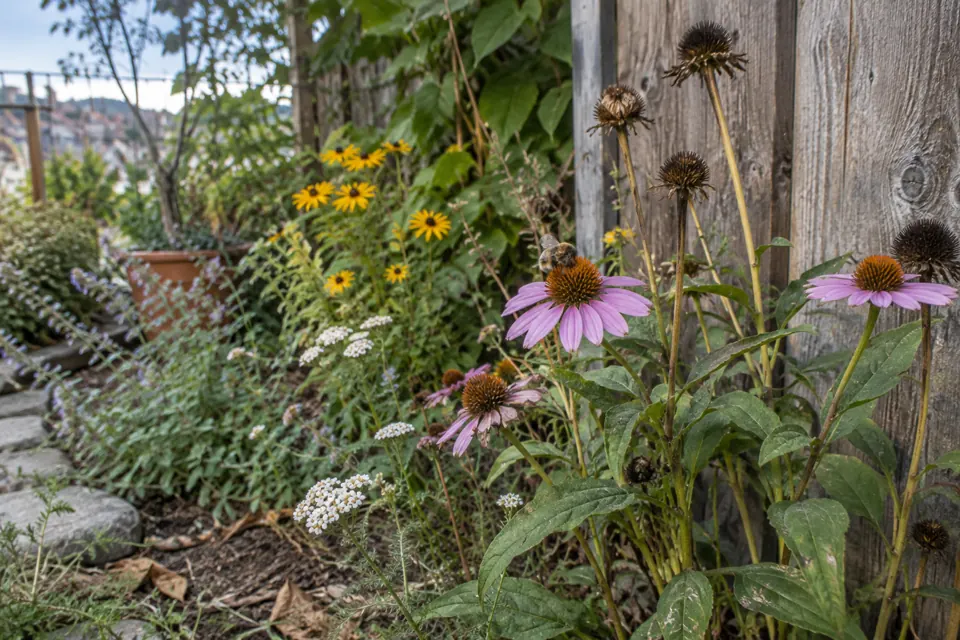
Shelter, Water, and Embracing Natural Untidiness
Nectar provides energy and pollen provides protein, but pollinators also require safe nesting sites and water. Many solitary bee species nest in hollow plant stems, dead wood, or patches of bare undisturbed soil. Leaving flower stalks and seed heads standing until early spring offers vital winter protection for overwintering insect larvae.
| Season | Target Pollinators | Ecological Requirement | Recommended Habitat Feature |
|---|---|---|---|
| Early Spring | Queen bumblebees, early solitary bees | Early energy nectar after winter emergence | Crocuses, lungwort, primroses, willow catkins |
| Midsummer | Wild bees, hoverflies, butterflies | Continuous high-volume nectar and pollen | Lavender, borage, echinacea, flowering mint, salvias |
| Late Autumn | Pre-hibernation queens and late foragers | Crucial pre-winter sustenance | Asters, sedums (hylotelephium), mature ivy blossoms |
| Winter | Dormant larvae, pupae, and adult insects | Insulated shelter against frost and damp | Standing hollow perennial stems, dried tussock grasses, leaf mulch |
Create a safe pollinator drinking station
- Fill a shallow ceramic saucer or bowl with clean river pebbles or small stones.
- Add fresh water so the stone tops remain dry, giving visiting bees safe dry footing to drink without drowning.
- Place the saucer near your flowering plants in a sheltered, sunny position and top it up on dry days.
Try it like this
Try it like this
- Ask a local native plant group or garden center what suits your conditions.
- Include different flower shapes and heights where space allows.
- Avoid routine pesticide use and leave a little untidy shelter over winter.